
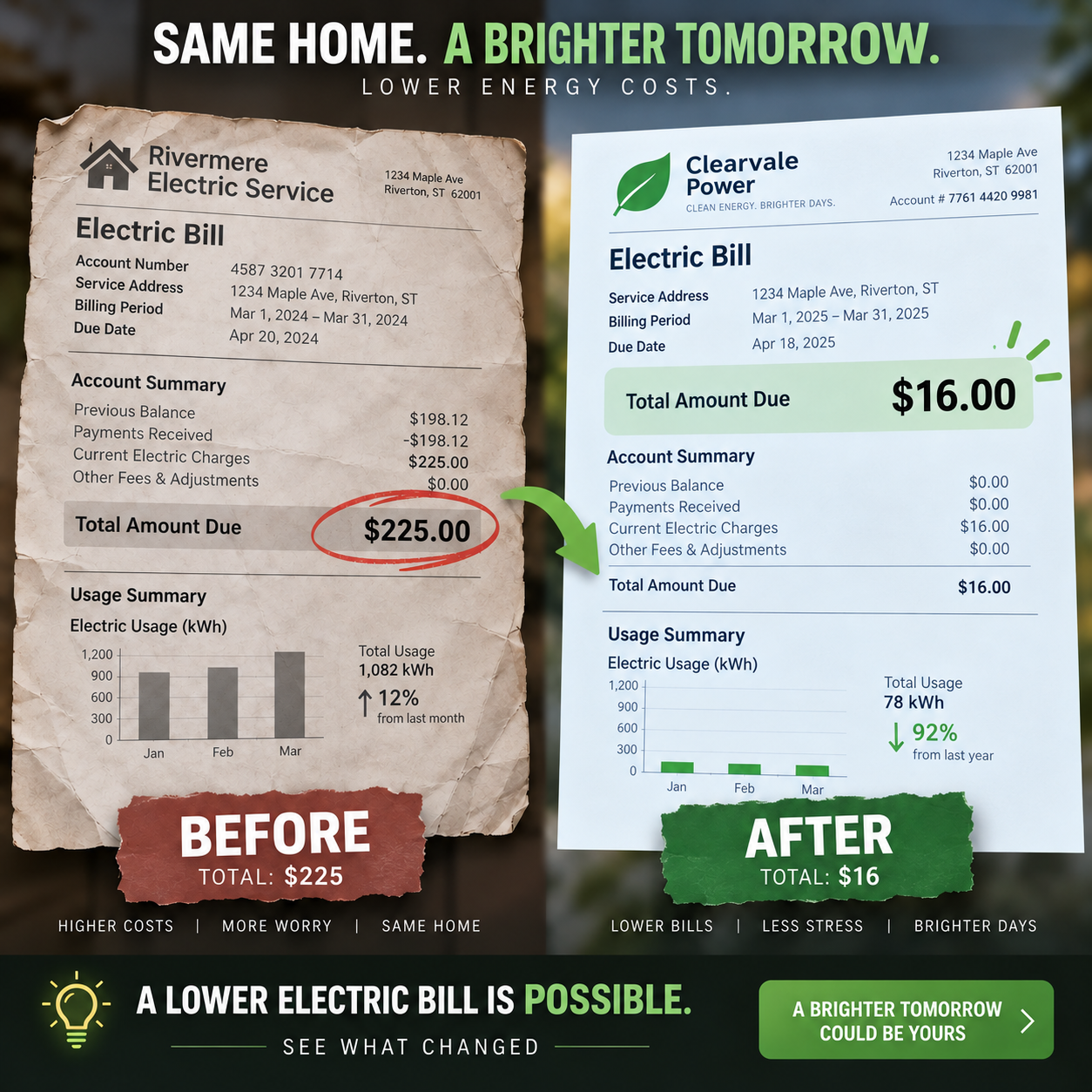
An electricity bill can become such a familiar monthly expense that you stop questioning it. But when you're paying close to $200 every month, it's worth looking at the bigger picture — and finding out whether there's room to reduce what you spend.
You've probably seen dramatic before-and-after comparisons. Going from a bill around $200 to one near $14 certainly gets your attention. That kind of difference is an illustration, not a typical outcome or a promise. Still, it raises a useful question: what could you change to make your own energy costs more manageable?
What a monthly bill really costs over time
A $200 electricity bill isn't just a $200 expense. If it stays at that level, it adds up to $2,400 over a year and $12,000 over five years, even before any changes in energy rates.
That's why recurring savings are worth paying attention to. You don't have to reach an extreme result for a lower bill to have a meaningful impact. A smaller, consistent reduction can leave more of your money available for other priorities, month after month.
For example: saving $25 a month adds up to $300 over one year and $1,500 over five years. At $50 a month, that becomes $600 a year and $3,000 over five years — assuming the savings remain consistent.
It's easy to overlook everyday energy costs
Most of us think about electricity when the bill arrives, not while we're going about our day. Power use is spread across routines, appliances and countless little decisions. Some are necessary, some are about convenience, and some are simply easy to forget.
Understanding the difference is often a better starting point than making big changes all at once. The goal isn't to make your home uncomfortable. It's to explore whether you're spending more than you need to — and which adjustments could actually suit your lifestyle.
The long-term difference is what matters
One lower statement can feel good. But the real value of reducing a recurring expense comes from repeating that improvement. Money you no longer spend on unnecessary energy use could support a savings goal, help cover household essentials or simply give you a little more room in your budget.
And unlike a one-time discount, an adjustment you can maintain has the potential to benefit you across many billing cycles. The key is to focus on realistic opportunities rather than assuming every home will achieve the same dramatic before-and-after result.
What makes a savings approach worth exploring?
Before trying anything new, it's worth considering whether the approach makes sense for your home. A useful option should be understandable, practical to maintain and relevant to the way your household actually uses electricity.
- Start with your own bill: look at recent usage and costs so you know what you're comparing.
- Think beyond the first month: consider whether any potential savings could continue over time.
- Keep your expectations realistic: savings depend on your usage, rates, climate and other household factors.
You don't need to commit to anything just to understand the options. The next page offers a closer look at an approach you can review for yourself — and decide whether it's worth considering.